
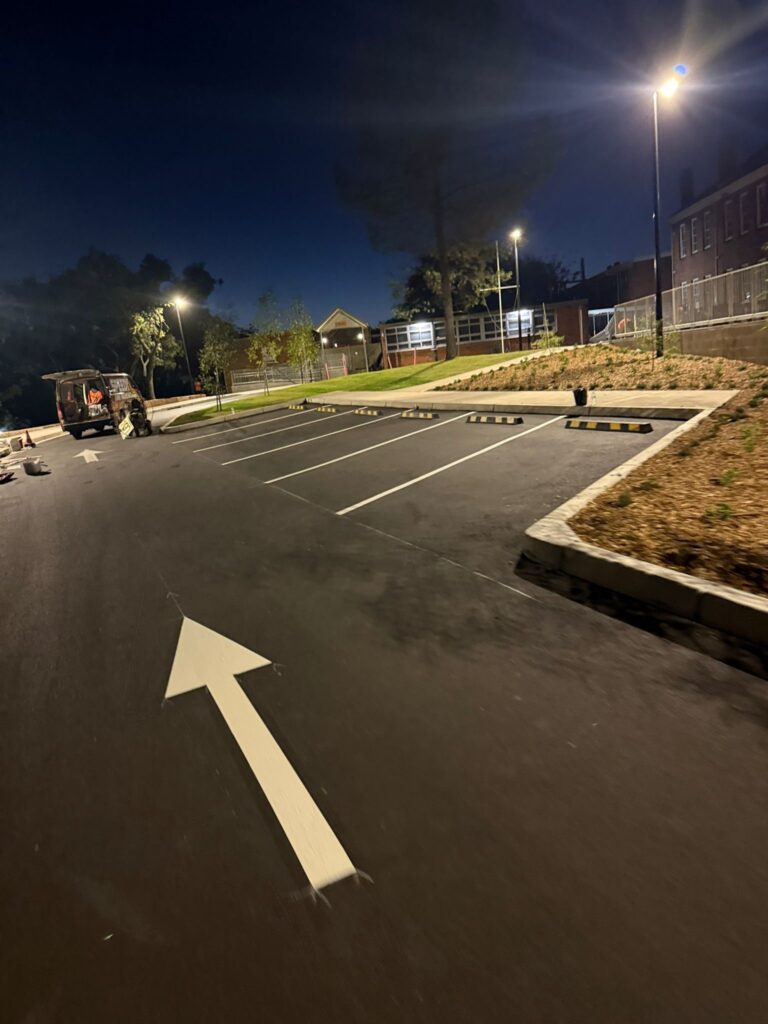
A professional car park is not defined by line marking alone. It is defined by how safely vehicles, pedestrians, delivery drivers and visitors move through the space. Every bay line, arrow, crossing and wheel stop has a purpose.
Wheel stops, also known as parking stops, are practical safety features designed to keep vehicles in the correct position. They reduce overhang, protect surrounding structures and support a cleaner parking layout. For commercial properties, strata buildings, warehouses, shopping centres, schools and medical facilities, wheel stops are part of a safer traffic-management system.
What Are Wheel Stops?
Wheel stops are physical barriers installed at the front of parking bays to limit how far a vehicle can move forward. They are usually fixed into concrete or asphalt and positioned so the vehicle’s tyres make contact before the car moves beyond the intended parking space.
They are commonly used near walls, kerbs, fences, garden beds, pedestrian paths, building frontages and adjacent parking bays. Their role is simple: keep vehicles contained within the correct area and reduce the risk of impact or obstruction.
When installed correctly, wheel stops work hand-in-hand with car park line marking. The line marking gives drivers the visual guide. The wheel stop provides the physical stopping point.
Why Wheel Stops Matter
A car park without proper stopping control can quickly become unsafe and expensive to maintain. Vehicles can roll too far forward, overhang into footpaths, block access points, damage walls, scrape kerbs or interfere with landscaped areas.
Wheel stops prevent these issues by adding discipline to the layout. They support correct vehicle positioning and help each bay function as intended. This matters in busy car parks where pedestrians, passenger vehicles, work vehicles and delivery access all operate within the same space.
Properly installed wheel stops minimize walkway overhang, protect infrastructure, and enhance safety. For property managers, this ensures a cleaner layout, increased driver confidence, and reduced damage.
Common Types of Wheel Stops
The right wheel stop depends on the site, surface, traffic volume.
Concrete wheel stops are strong and durable, often used in commercial and industrial car parks. They suit high-traffic environments and are commonly selected where a heavy-duty solution is required.
Rubber wheel stops are popular across commercial, strata and residential settings. They are lighter than concrete, often include reflective markings and can be a practical choice where visibility and ease of installation matter.
Recycled plastic wheel stops can be a clean, low-maintenance option for sites needing a practical finish without excessive weight. They may suit different car park environments depending on the surface and use.
The best choice should not be based on appearance alone. It should be based on what the wheel stop needs to protect, how the car park is used and the traffic moving through the site.
What Impacts the Cost of Wheel Stops?
Wheel stop installation costs vary depending on the project. A small strata car park will have a different scope from a large commercial or industrial site.
Common cost factors include the number of wheel stops required, material type, concrete or asphalt surface, fixing method, site access, removal of existing wheel stops, whether new line marking is being completed and layout complexity.
For accurate pricing, the site should be reviewed with measurements, photos or an on-site inspection. Guessing from a rough photo can lead to the wrong quantity, incorrect placement or an estimate that does not match the real scope.
Why Professional Installation Matters
Wheel stops need to be placed correctly. If installed too far forward, they may not protect the wall, kerb or area they are meant to protect. If placed too far back, they can reduce usable bay space or create obstructions.
A professional installation considers bay size, vehicle overhang, pedestrian movement, surface condition, access points, kerbs, walls and traffic flow. The goal is not simply to install a block. The goal is to create a safer parking area.
Wheel Stops and Line Marking Work Together
Wheel stops are most effective when they are part of a complete car park layout. Fresh line marking provides clear visual guidance. Directional arrows manage traffic flow. Pedestrian crossings improve safety. Bollards, signage, and wheel stops help reinforce the system.
When these elements work together, the result is a car park that looks sharper, functions better, and gives drivers clear direction from entry to exit.
Need Wheel Stops Installed?
Speedy Line Marking helps businesses, strata managers, builders, and property owners improve car park safety and presentation with professional wheel stop installation and car park line marking services.
Need new wheel stops, replacement parking stops, refreshed bay lines, directional arrows, pedestrian crossings or a full car park upgrade? We can assess the site and recommend a practical solution.